By: Gwyneth Smith, J.D. ’27 and Shrinithi Venkatesan, J.D. ’25 Our world is rapidly aging. As a result of the […]

By: Gwyneth Smith, J.D. ’27 and Shrinithi Venkatesan, J.D. ’25 Our world is rapidly aging. As a result of the […]

By: Katie Smart, J.D. ’26 and Shrinithi Venkatesan, J.D. ’25
On Friday, March 1, 2024, William & Mary Law School’s Journal of Race, Gender, and Social Justice hosted its 2024 Symposium on Restorative Justice. Aparna Polavarapu, a speaker at the event, discussed international human rights law as it relates to restorative justice in her presentation, “Human Rights, Human Duties: Making a Rights-Based Case for Community-Based Restorative Justice.”

By: Caitlin Parets, Scarlett Del Giudice Boyer, & Jenik Radon
Lawyers around the world are bound by codes of ethics designed to protect the legal profession and the individuals it serves, but lawyers need a Hippocratic Oath. Rooted in antiquity and still professed today by medical practitioners, modern iterations of the Hippocratic Oath include promises not only to use one’s medical knowledge to the best of one’s ability but also to “not use [one’s] medical knowledge to violate human rights and civil liberties.” [. . .] Lawyers would benefit from a similar ethical consideration for human rights because sometimes simply following the law does not sufficiently capture ethical practices. The wisdom of Emmanuel Lulin, a lawyer and the Chief Ethics Officer for L’Oréal, sums it up beautifully: “Ethics is not about obeying the law. Ethics is about adhering to shared values. . . . Because very often things can be lawful but awful.” [. . .]

By Andra Tofan, Oscar Zou, & Jenik Radon
The invasion of Ukraine by Russia, an energy powerhouse, has woken the EU up to the inevitable truth that (over)dependence on other countries’ supplies based on mere economic necessity is not only unwise but risky in the long run. As the European Commission’s President Ursula Gertrud von der Leyen declared, “[t]he European Union has therefore decided to . . . turn towards more reliable, trustworthy partners.” Two questions naturally arise. First, what does “reliable and trustworthy” mean? Second, how do we ensure partners stay “reliable and trustworthy” in the long run? [. . .]
By Sharon Pia Hickey
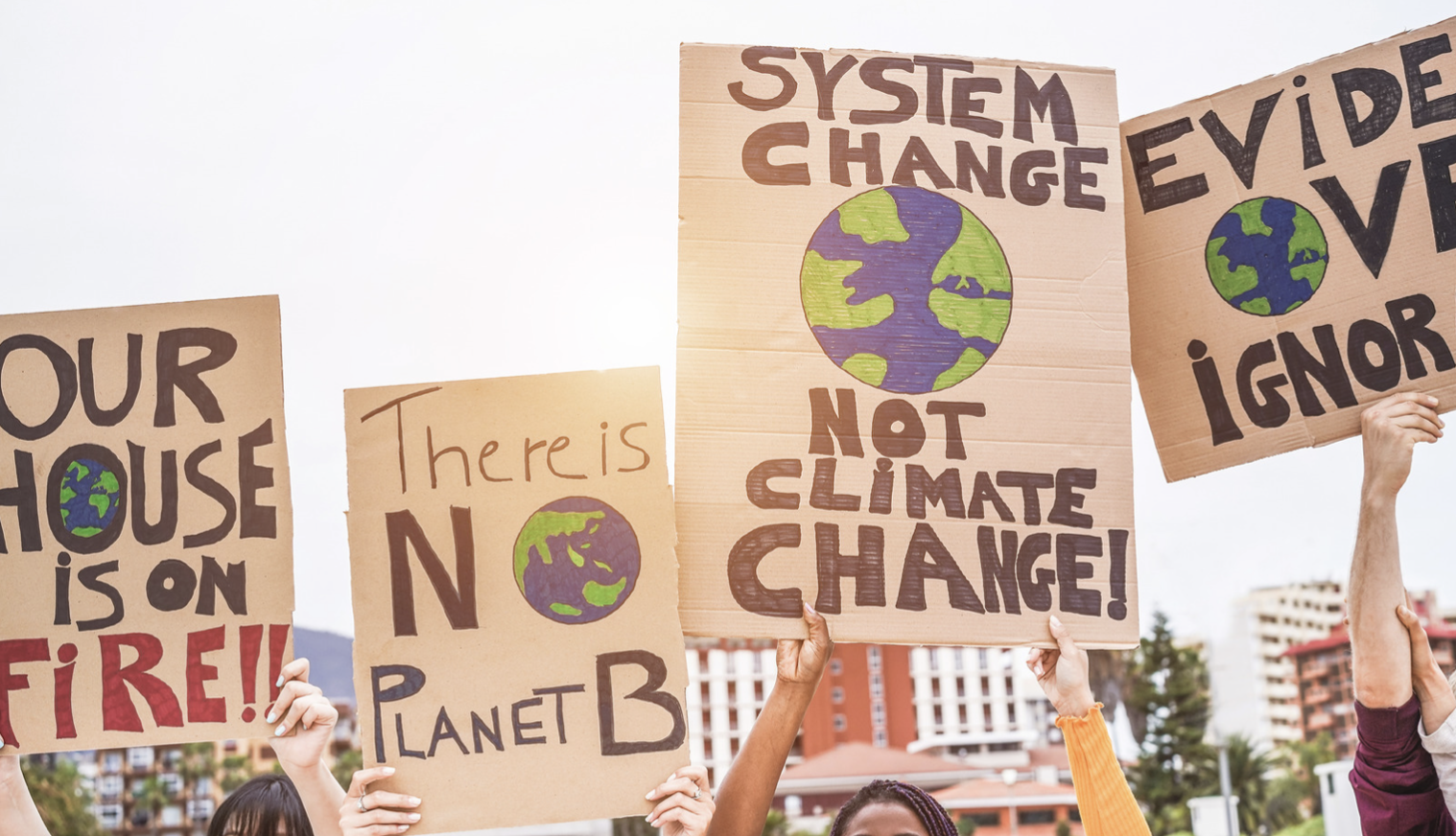
The International Institute for Democracy and Electoral Assistance’s (“International IDEA”) “Global State of Democracy Report 2021” has recently described how, while the number of democracies is increasing, the quality of democratic governance has fallen. Covid-19, in particular, has exacerbated the fault lines that were widening before the pandemic struck. For many (especially in the Global North), the experience of lockdowns, restrictions, fear, and scarcity was the first taste of what life might be like under emergency conditions caused by climate change. While the jury is still out on how the world handled the pandemic, it is clear that innovation, solidarity, and commitment will be needed to sustain democracy in the face of the ever-increasing manifestations of climate change. [. . .]

By Rachel Sleiman
Director of the Promise Institute for Human Rights at the University of California-Los Angeles School of Law, about recent efforts to establish ecocide as an international crime and in particular as the fifth international crime within the jurisdiction of the International Criminal Court (ICC). [. . .]

By Mel Marquis.
Bundling practices involving patents are fairly common, but in the EU, it can potentially raise competition law concerns. This short comment provides an overview of how EU law may apply in this context. […]

By Howell Ma.
The legalization of gay marriage is being argued in China right now. It is has been discussed in the society for years, especially after the United States (“U.S.”) Supreme Court Obergefell ruling came out in 2015. Constantly, there are discussions regarding why it is so difficult for the People’s Republic of China (“PRC”) to recognize same-sex marriage while ancient China had relatively more tolerant policies towards same-sex relationships. This article argues the greatest challenge is not the constitutional grounds, but rather social hurdles: traditional Confucian culture, the government’s ignorance of the existence of lesbian, gay, bisexual and transgender (“LGBT”) people in China, and the general mass social views of homosexuality and same-sex marriage in China. […]