Tag Archive for ‘Europe’

Addressing Ambiguous Loss for Families of the Wartime Missing in Kosovo – Part II

Addressing Ambiguous Loss for Families of the Wartime Missing in Kosovo – Part II

By: Valerie Brankovic

The psychological challenges faced by families of the missing “undermine relationships among communities” and prevent the social fabric from healing for post-conflict states. This paper recommends that Kosovo authorities implement a two-pronged strategy to address the unique challenges posed by families’ ambiguous loss. First, Kosovo’s government should renew its recognition of the plight of families of the missing. Second, the government and civil society…

Addressing Ambiguous Loss for Families of the Wartime Missing in Kosovo – Part I

Addressing Ambiguous Loss for Families of the Wartime Missing in Kosovo – Part I

By: Valerie Brankovic

More than 25 years after the conclusion in 1999 of the war between Serbia and Kosovo, an estimated 1,595 people remain missing due to wartime violence and enforced disappearances. Most of the missing are ethnic Albanians, although ethnic Serbs and some from the minority Roma are also included in that figure. Kosovo’s missing persons problem is not unique: violent conflicts frequently involve disappearances of individuals living in the impacted regions.

Human Rights and Ethical Lawyering: The Need for a Lawyer’s Hippocratic Oath

Human Rights and Ethical Lawyering: The Need for a Lawyer’s Hippocratic Oath

By: Caitlin Parets, Scarlett Del Giudice Boyer, & Jenik Radon

Lawyers around the world are bound by codes of ethics designed to protect the legal profession and the individuals it serves, but lawyers need a Hippocratic Oath. Rooted in antiquity and still professed today by medical practitioners, modern iterations of the Hippocratic Oath include promises not only to use one’s medical knowledge to the best of one’s ability but also to “not use [one’s] medical knowledge to violate human rights and civil liberties.” [. . .] Lawyers would benefit from a similar ethical consideration for human rights because sometimes simply following the law does not sufficiently capture ethical practices. The wisdom of Emmanuel Lulin, a lawyer and the Chief Ethics Officer for L’Oréal, sums it up beautifully: “Ethics is not about obeying the law. Ethics is about adhering to shared values. . . . Because very often things can be lawful but awful.” [. . .]

AI Governance, Democracy, & Technology in the Legal Field with Dr. Anjanette Raymond

AI Governance, Democracy, & Technology in the Legal Field with Dr. Anjanette Raymond

Interviewed and written by Shrinithi Venkatesan and Rachel Sleiman

Dr. Anjanette Raymond is an Associate Professor in the Department of Business Law & Ethics at Indiana University and Director of the Program on Data Management and Information Governance at the Ostrom Workshop. Dr. Raymond’s primary research areas include online dispute resolution, data governance, privacy, and artificial intelligence. The Comparative Jurist interviewed Dr. Raymond to address technology’s consequences on U.S. elections, privacy concerns, and the implications of AI governance in the legal field. [. . .]

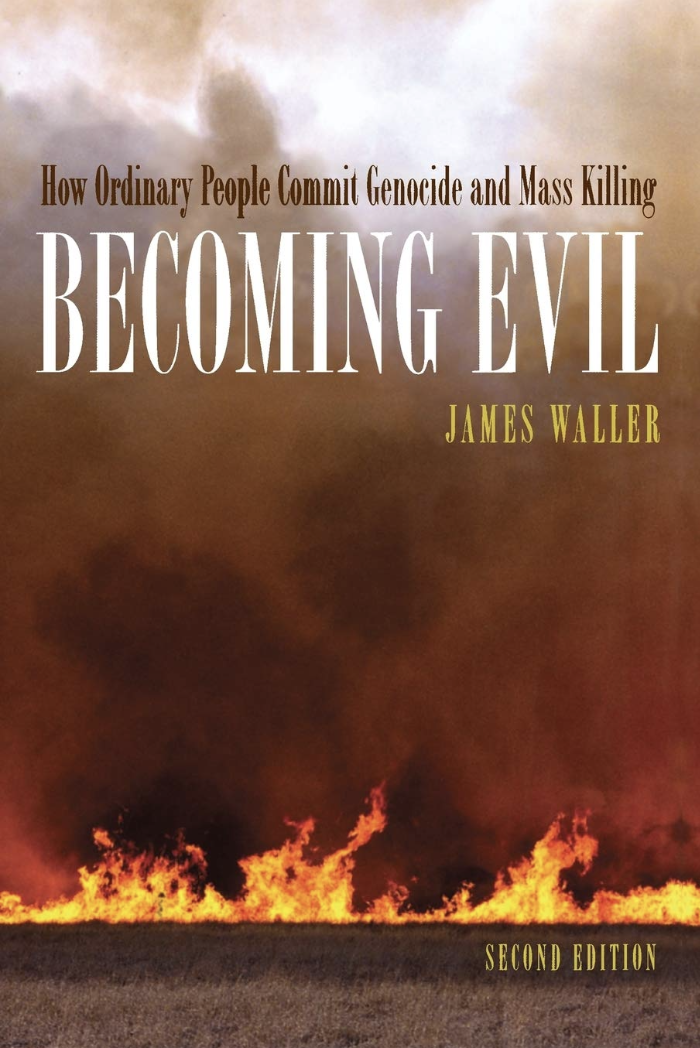
Exploring Evil with Dr. James Waller

Exploring Evil with Dr. James Waller

In October 2022, The Comparative Jurist sat down with Dr. James Waller, Cohen Professor of Holocaust and Genocide Studies at Keene State College in New Hampshire and Director of Academic Programs at the Auschwitz Institute for Peace and Reconciliation (AIPR), an international non-governmental organization dedicated to genocide and mass atrocity prevention.  Dr. Waller, a trained social psychologist, visited William & Mary Law School to present the research behind his book Becoming Evil: How Ordinary People Commit Genocide and Mass Killing. [. . .]

Populism and Constitutionalism in East-Central Europe

Populism and Constitutionalism in East-Central Europe

By Gábor Halmai.

The recent deviations from the shared values of constitutionalism towards a kind of “populist, illiberal constitutionalism” in East-Central Europe raise the theoretical questions: are populism and illiberalism what the leaders of these backsliding states proud of, reconcilable with constitutionalism? I shall concentrate on a particular version of populism, which is nationalist and illiberal, and mainly present in Hungary and Poland, and in other countries of the region. Most are also members of the European Union, a valued community based on liberal democratic constitutionalism.  The arguments set forth below about East-Central European populist constitutionalism in this paper do not necessarily apply to other parts of Europe (Greece and Spain), Latin-America (Bolivia), or the US, where populism has a different character, and its relationship to constitutionalism is distinct from the Hungarian or the Polish variant. […]