By: Gwyneth Smith, J.D. ’27 and Shrinithi Venkatesan, J.D. ’25 Our world is rapidly aging. As a result of the […]

By: Gwyneth Smith, J.D. ’27 and Shrinithi Venkatesan, J.D. ’25 Our world is rapidly aging. As a result of the […]

By: Valerie Brankovic
More than 25 years after the conclusion in 1999 of the war between Serbia and Kosovo, an estimated 1,595 people remain missing due to wartime violence and enforced disappearances. Most of the missing are ethnic Albanians, although ethnic Serbs and some from the minority Roma are also included in that figure. Kosovo’s missing persons problem is not unique: violent conflicts frequently involve disappearances of individuals living in the impacted regions.
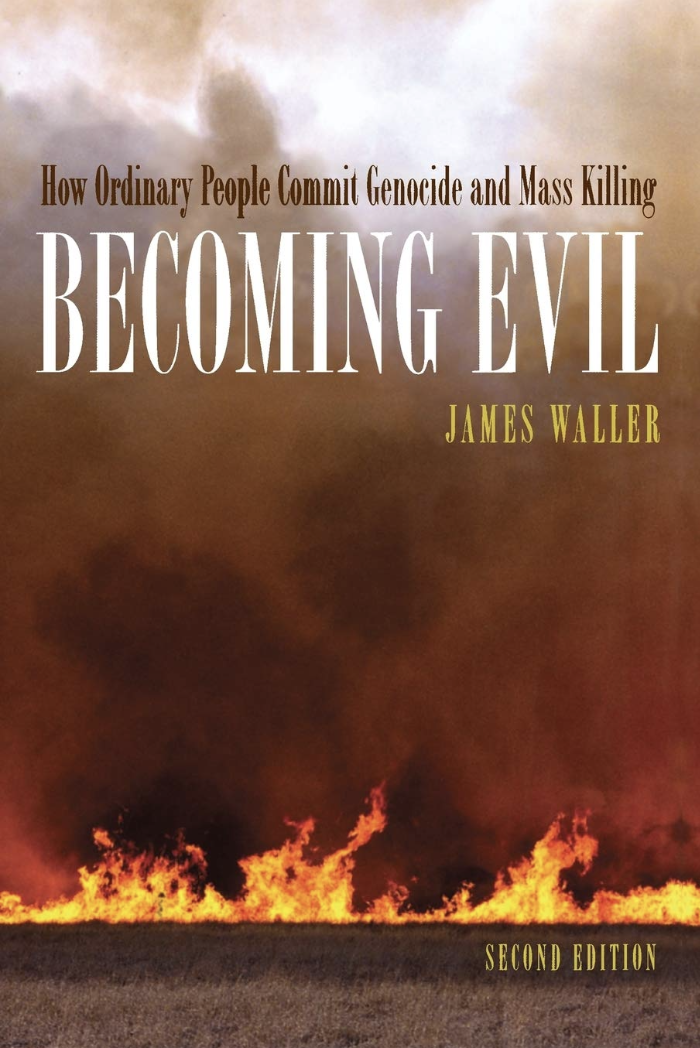
In October 2022, The Comparative Jurist sat down with Dr. James Waller, Cohen Professor of Holocaust and Genocide Studies at Keene State College in New Hampshire and Director of Academic Programs at the Auschwitz Institute for Peace and Reconciliation (AIPR), an international non-governmental organization dedicated to genocide and mass atrocity prevention. Dr. Waller, a trained social psychologist, visited William & Mary Law School to present the research behind his book Becoming Evil: How Ordinary People Commit Genocide and Mass Killing. [. . .]

By Rachel Sleiman
On Friday, January 28, 2022, William & Mary Law School’s Human Security Law Center held its annual symposium online, with this year’s topic centering on Media Freedom and Human Rights. The Symposium hosted experts from around the world to address various issues surrounding freedom of expression, hate speech, incitement, and digital media. This article is the first of a three-part series about the Symposium’s featured panel events. The Human Security Law Center welcomed renowned Lebanese journalist Dr. May Chidiac to open the Symposium as keynote speaker, which also featured Professor Jenik Radon of Columbia University’s School of International & Public Affairs (SIPA) as moderator. [. . .]

The 2021-2022 academic year marks five years since the creation of the Comparative Jurist Blog by William & Mary law students. Two of the Blog’s current members interviewed four of its former members to learn about their experiences with the Comparative Jurist and how it has influenced their careers.
By Ignacio Zabala Alonso
The Court of Justice of the European Union (CJEU) has set the invalidity of intra-EU arbitration agreements, and the possibility of enforcing those intra-EU awards in the European Union. However, the enforceability of intra-EU awards outside the EU – for example, in the United States – is not clear. In order to understand the CJEU’s logic used to invalidate the intra-EU arbitration awards, we need to learn about the CJEU’s relevant decisions in this matter. […]

By Rachel Sleiman
Director of the Promise Institute for Human Rights at the University of California-Los Angeles School of Law, about recent efforts to establish ecocide as an international crime and in particular as the fifth international crime within the jurisdiction of the International Criminal Court (ICC). [. . .]

By Regina Waugh, IFES Senior Global Gender Advisor With Contributors Linda “Ellie” Halfacre, Alexandra Brown, Patrick Quimby
For true democracy to exist, all citizens must have equal access to elections.[1] The International Convention on Civil and Political Rights (ICCPR), to which 173 countries are States Parties, makes clear that this includes equal access for women and men.[2] The Convention on the Elimination of All Forms of Discrimination against Women (CEDAW) explicitly promotes women’s political […]

By Louise D. Williams
In March 2020, no sooner had COVID-19 lockdowns begun sweeping the globe than the breadth of the world’s “digital divide” came into full view. The pandemic forced students, workers, and businesses worldwide to carve digital pathways toward business-as-usual-as-possible. They did so, respectively, by transitioning to online learning, endeavoring to work remotely (job-permitting), and increasing their investments in digital services and e-commerce[. . .]

By Peggy Cooper Davis
I was honored in September of 2020 to join an august group of speakers convened by Professor Christine Warren, the brilliant and prolific director of William and Mary’s Center for Comparative Legal Studies and Post-Conflict Peacebuilding. Professor Warren had called us together at a time of urgent national soul-searching that was triggered by official and sometimes deadly violence against Black and Brown people and against demonstrators supporting the idea that Black lives matter. We came together to understand transitional justice more fully and to assess its applicability in the United States. [. . .]

By Nancy Rosen, Cameron Krause, and Jenik Radon
With the Brexit withdrawal agreement concluded, the United States has an opportunity to finish what it started with the United Kingdom and create a strong free trade agreement—but questions abound. First, is it really an opportunity? Specifically, should it be a focus of US efforts? And should it be a priority before a free trade agreement is entered into with the EU, a much larger, and therefore more important trade partner of the US? [. . .]

By Allison Lofgren and Jenik Radon
Seven years after talks between the European Union and China commenced, a surprise eleventh-hour investment agreement was struck on December 30, 2020, despite requests from the incoming administration of President Biden to wait. This deal, the EU-China Comprehensive Agreement on Investment (CAI), is intended to replace the bilateral investment treaties that the majority of EU member states currently have with China, effectively unifying and standardizing them. [. . .]