Archive for ‘Post-Conflict Peace Building’

Addressing Ambiguous Loss for Families of the Wartime Missing in Kosovo – Part II

Addressing Ambiguous Loss for Families of the Wartime Missing in Kosovo – Part II

By: Valerie Brankovic

The psychological challenges faced by families of the missing “undermine relationships among communities” and prevent the social fabric from healing for post-conflict states. This paper recommends that Kosovo authorities implement a two-pronged strategy to address the unique challenges posed by families’ ambiguous loss. First, Kosovo’s government should renew its recognition of the plight of families of the missing. Second, the government and civil society…

Addressing Ambiguous Loss for Families of the Wartime Missing in Kosovo – Part I

Addressing Ambiguous Loss for Families of the Wartime Missing in Kosovo – Part I

By: Valerie Brankovic

More than 25 years after the conclusion in 1999 of the war between Serbia and Kosovo, an estimated 1,595 people remain missing due to wartime violence and enforced disappearances. Most of the missing are ethnic Albanians, although ethnic Serbs and some from the minority Roma are also included in that figure. Kosovo’s missing persons problem is not unique: violent conflicts frequently involve disappearances of individuals living in the impacted regions.

Exploring Evil with Dr. James Waller

Exploring Evil with Dr. James Waller

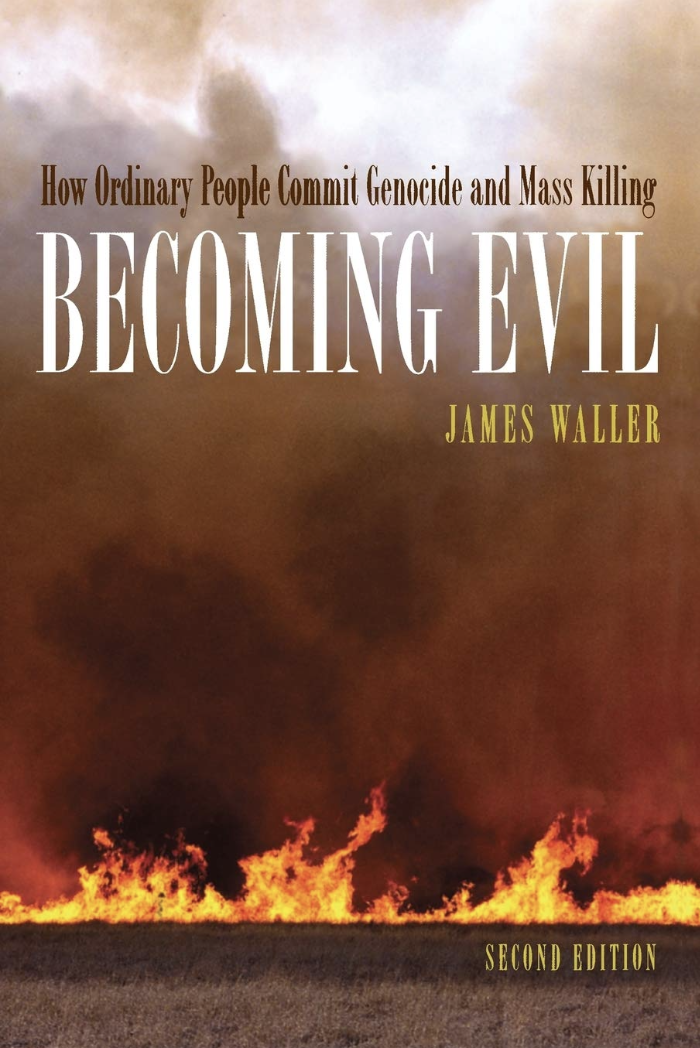
In October 2022, The Comparative Jurist sat down with Dr. James Waller, Cohen Professor of Holocaust and Genocide Studies at Keene State College in New Hampshire and Director of Academic Programs at the Auschwitz Institute for Peace and Reconciliation (AIPR), an international non-governmental organization dedicated to genocide and mass atrocity prevention.  Dr. Waller, a trained social psychologist, visited William & Mary Law School to present the research behind his book Becoming Evil: How Ordinary People Commit Genocide and Mass Killing. [. . .]

Not All Wounds Heal with Time: Why the Gambia Needs Transitional Justice

Not All Wounds Heal with Time: Why the Gambia Needs Transitional Justice

By Shaina Salman.

It happened quickly. Yahya Jammeh, The Gambia’s twenty-two-year de facto dictator, boarded a plane to Equatorial-Guinea accompanied by Alpha Condé, Guinea’s president, and most of his fleet of luxury cars. It was almost as if Jammeh’s departure suddenly ripped a band-aid from The Gambia exposing its deep wound to the world- a wound many accuse Jammeh himself of inflicting. Many now think it is time to move on. With Jammeh gone and Adama Barrow having been democratically elected President of The Gambia, many think it is now time to forget about the past and forge a new path.  Unfortunately, as we have learned from countries that have dealt with conflict, dictatorships, and civil war, time alone does not heal all wounds. Sometimes, wounds need to be treated, disinfected, and nursed back to health and the same can be said for societies that have been marred by regimes of terror. These societies need to deal with the sources of its pain, understand past transgressions in order to avoid further damage in the future. The Gambia needs transitional justice – it needs mechanisms that deal with all the open questions left to be answered -it needs to do so on its own and it needs to do so by establishing equitable processes that allow people to find peace in the truth and to repair the years of damage as best as possible. […]