By: Gwyneth Smith, J.D. ’27 and Shrinithi Venkatesan, J.D. ’25 Our world is rapidly aging. As a result of the […]

By: Gwyneth Smith, J.D. ’27 and Shrinithi Venkatesan, J.D. ’25 Our world is rapidly aging. As a result of the […]

By: Valerie Brankovic
The psychological challenges faced by families of the missing “undermine relationships among communities” and prevent the social fabric from healing for post-conflict states. This paper recommends that Kosovo authorities implement a two-pronged strategy to address the unique challenges posed by families’ ambiguous loss. First, Kosovo’s government should renew its recognition of the plight of families of the missing. Second, the government and civil society…

By: Valerie Brankovic
More than 25 years after the conclusion in 1999 of the war between Serbia and Kosovo, an estimated 1,595 people remain missing due to wartime violence and enforced disappearances. Most of the missing are ethnic Albanians, although ethnic Serbs and some from the minority Roma are also included in that figure. Kosovo’s missing persons problem is not unique: violent conflicts frequently involve disappearances of individuals living in the impacted regions.

By: Katie Smart, J.D. ’26 and Shrinithi Venkatesan, J.D. ’25
On Friday, March 1, 2024, William & Mary Law School’s Journal of Race, Gender, and Social Justice hosted its 2024 Symposium on Restorative Justice. Aparna Polavarapu, a speaker at the event, discussed international human rights law as it relates to restorative justice in her presentation, “Human Rights, Human Duties: Making a Rights-Based Case for Community-Based Restorative Justice.”

By: Caitlin Parets, Scarlett Del Giudice Boyer, & Jenik Radon
Lawyers around the world are bound by codes of ethics designed to protect the legal profession and the individuals it serves, but lawyers need a Hippocratic Oath. Rooted in antiquity and still professed today by medical practitioners, modern iterations of the Hippocratic Oath include promises not only to use one’s medical knowledge to the best of one’s ability but also to “not use [one’s] medical knowledge to violate human rights and civil liberties.” [. . .] Lawyers would benefit from a similar ethical consideration for human rights because sometimes simply following the law does not sufficiently capture ethical practices. The wisdom of Emmanuel Lulin, a lawyer and the Chief Ethics Officer for L’Oréal, sums it up beautifully: “Ethics is not about obeying the law. Ethics is about adhering to shared values. . . . Because very often things can be lawful but awful.” [. . .]

By Andra Tofan, Oscar Zou, & Jenik Radon
The invasion of Ukraine by Russia, an energy powerhouse, has woken the EU up to the inevitable truth that (over)dependence on other countries’ supplies based on mere economic necessity is not only unwise but risky in the long run. As the European Commission’s President Ursula Gertrud von der Leyen declared, “[t]he European Union has therefore decided to . . . turn towards more reliable, trustworthy partners.” Two questions naturally arise. First, what does “reliable and trustworthy” mean? Second, how do we ensure partners stay “reliable and trustworthy” in the long run? [. . .]

Interviewed and written by Shrinithi Venkatesan and Rachel Sleiman
Dr. Anjanette Raymond is an Associate Professor in the Department of Business Law & Ethics at Indiana University and Director of the Program on Data Management and Information Governance at the Ostrom Workshop. Dr. Raymond’s primary research areas include online dispute resolution, data governance, privacy, and artificial intelligence. The Comparative Jurist interviewed Dr. Raymond to address technology’s consequences on U.S. elections, privacy concerns, and the implications of AI governance in the legal field. [. . .]

By Zachary Outzen
Regarding universal healthcare, Americans seem to be longing for something that is always out of reach. It is no secret that the United States (U.S.) lags behind other wealthy nations in guaranteeing universal healthcare coverage. [. . .]
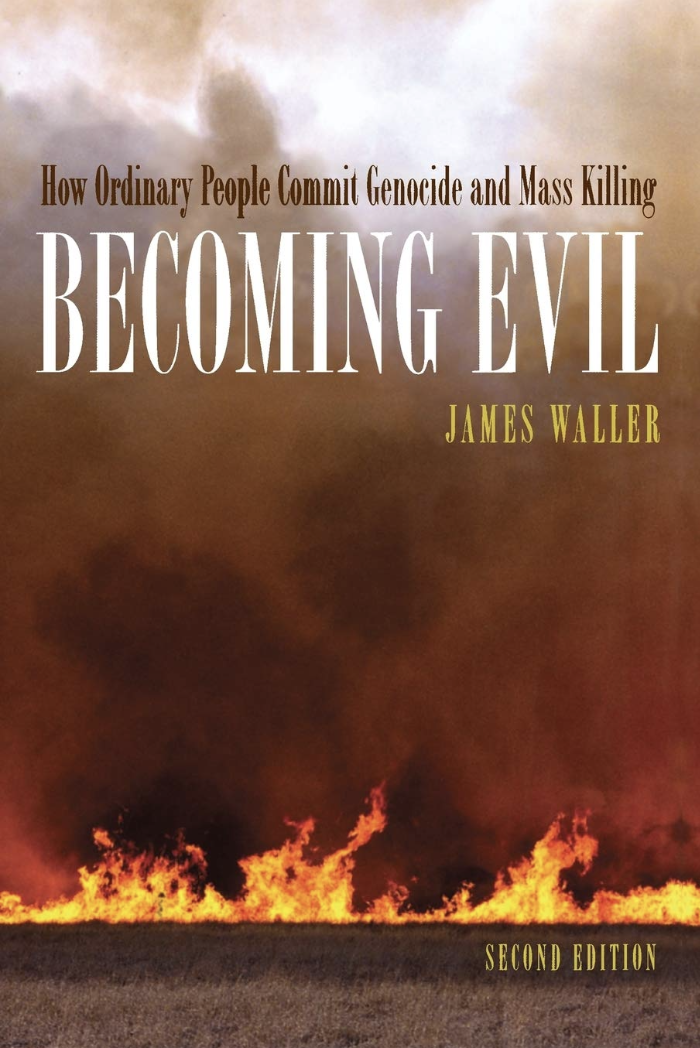
In October 2022, The Comparative Jurist sat down with Dr. James Waller, Cohen Professor of Holocaust and Genocide Studies at Keene State College in New Hampshire and Director of Academic Programs at the Auschwitz Institute for Peace and Reconciliation (AIPR), an international non-governmental organization dedicated to genocide and mass atrocity prevention. Dr. Waller, a trained social psychologist, visited William & Mary Law School to present the research behind his book Becoming Evil: How Ordinary People Commit Genocide and Mass Killing. [. . .]
By Sharon Pia Hickey
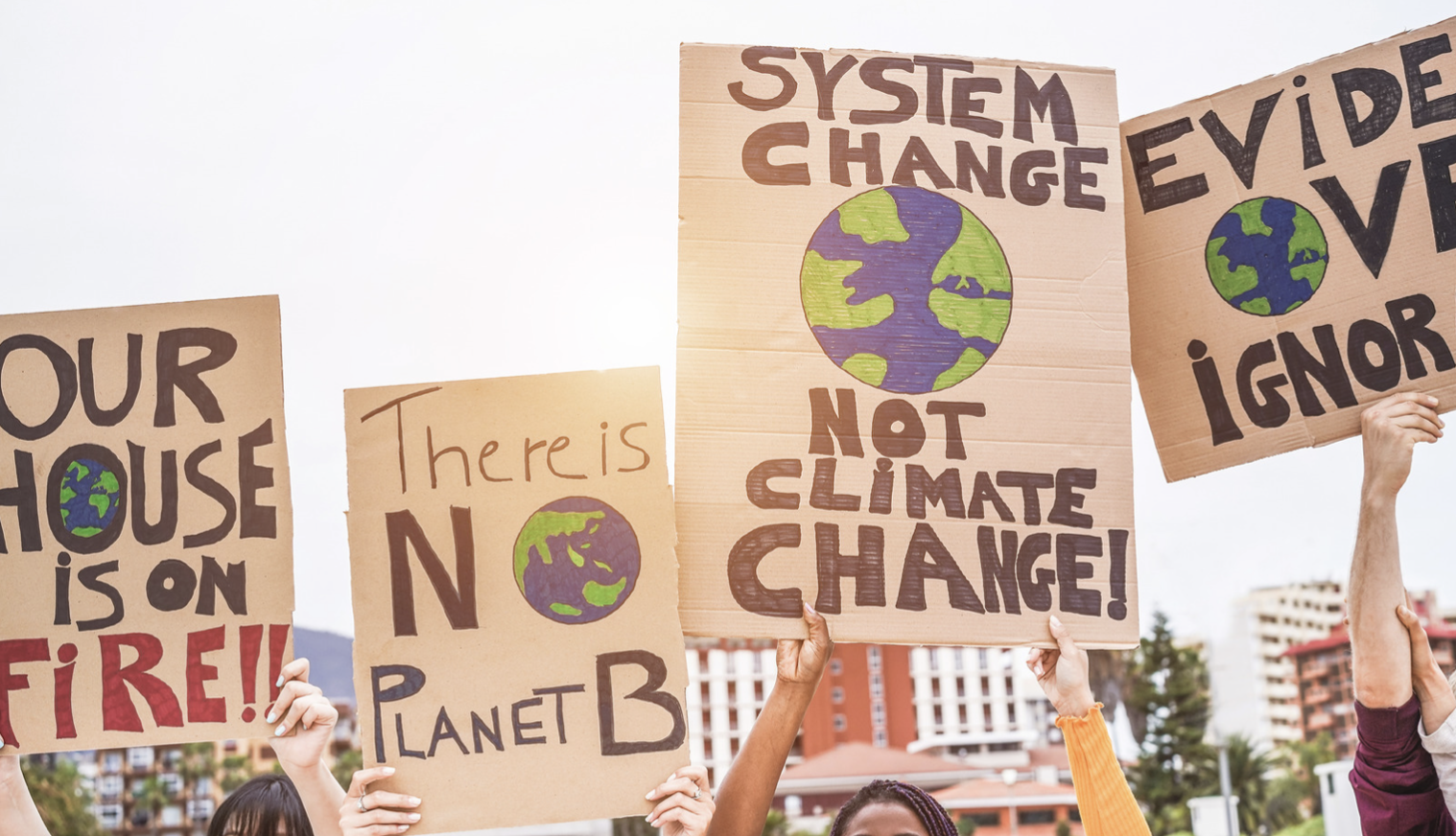
The International Institute for Democracy and Electoral Assistance’s (“International IDEA”) “Global State of Democracy Report 2021” has recently described how, while the number of democracies is increasing, the quality of democratic governance has fallen. Covid-19, in particular, has exacerbated the fault lines that were widening before the pandemic struck. For many (especially in the Global North), the experience of lockdowns, restrictions, fear, and scarcity was the first taste of what life might be like under emergency conditions caused by climate change. While the jury is still out on how the world handled the pandemic, it is clear that innovation, solidarity, and commitment will be needed to sustain democracy in the face of the ever-increasing manifestations of climate change. [. . .]

By Rachel Sleiman
On Friday, January 28, 2022, William & Mary Law School’s Human Security Law Center held its annual symposium online, with this year’s topic centering on Media Freedom and Human Rights. The Symposium hosted experts from around the world to address various issues surrounding freedom of expression, hate speech, incitement, and digital media. This article is the first of a three-part series about the Symposium’s featured panel events. The Human Security Law Center welcomed renowned Lebanese journalist Dr. May Chidiac to open the Symposium as keynote speaker, which also featured Professor Jenik Radon of Columbia University’s School of International & Public Affairs (SIPA) as moderator. [. . .]

By Allison Lofgren
On Friday, January 28, 2022, Professor Nancy Combs and the Human Security Law Center at William & Mary Law School hosted a Symposium on Media Freedom & Human Rights. The second panel addressed comparative free speech issues and was moderated by Professor Timothy Zick, who is the John Marshall Professor of Government and Citizenship and the William H. Cabell Research Professor of Law at William & Mary Law School. He is one of the foremost experts on American freedom of speech law whose views routinely appear in the popular press, and he has published several dozen highly-regarded books and law review articles on the First Amendment.
The three panelists–Dr. Mart Susi, a Professor at Tallinn University in Estonia; Professor Ronald J. Krotoszynski, Jr. from the University of Alabama School of Law; and Michael R. Sherwin, a lawyer at Kobre & Kim–each discussed their perspective on the most pressing free speech issues in their respective areas of expertise. Throughout the panel, they primarily focused on various limitations on free speech in Europe and the United States. [ . . . ]